
Moscow has labelled Germany's international broadcaster Deutsche Welle (DW) an "undesirable organization," effectively banning its activities in the country.
The move follows a recommendation by the State Duma, Russia's lower house of parliament, DW reported on Sunday.
A government statement posted on Telegram on Saturday said the General Prosecutor's Office now considers DW to be "at the forefront of hostile anti-Russian propaganda." The prosecutor's office has not issued a separate statement.
DW Director General Barbara Massing criticized the tightening of the crackdown on free media by the Russian judiciary.
"Russia may label us an undesirable organization, but that won't deter us. This latest attempt to silence free media highlights the Russian regime's blatant disregard for press freedom and exposes its fear of independent information," Massing said in a statement.
"Despite censorship and blocking of our services by the Russian government, DW's Russian-language service now reaches more people than ever before.
"We will continue to report independently – on the war of aggression against Ukraine and other topics about which little information is available in Russia. So that people can form their own opinions," Massing said.
Russia has targeted DW for years, revoking accreditations and banning its broadcasts in February 2022. The broadcaster's website has been blocked, and DW was labelled a "foreign agent" in March 2022.
The new designation further tightens restrictions, as cooperation with an "undesirable organization" can lead to fines or prison sentences.
"This means that Russian employees of DW are particularly affected," Massing added.
Russian lawmaker Vasily Piskaryov said that cooperation with DW would now be punished as a violation of the law. He is chairman of the State Duma commission that investigates alleged foreign interference in Russia's internal affairs.
DW has yet to receive formal notification from the General Prosecutor's Office, Massing said. However, there are measures to circumvent censorship in order to continue to reach Russians in their home country.
In addition to the media, the Russian judiciary has also classified non-governmental organizations and foundations as "undesirable." The list of those affected is getting longer and longer.
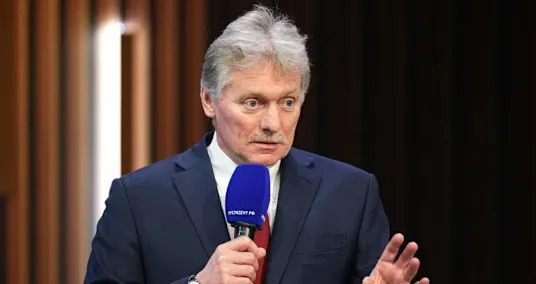
Kremlin spokesman Dmitry Peskov once described the censorship measures in Russia as unprecedented and justified them as necessary in view of the "information war" accompanying Moscow's invasion of Ukraine.
LATEST POSTS
- 1
 Rediscovering Experience Through Excursions: Individual Travel Stories
 - 2Decrease in Home Buy Credits and Home loan Renegotiating Rates: An Outline of Latest things
- 3Top 20 Style Brands for Pioneers
- 4Report: Russian military pressuring students to work as drone pilots
- 5Hamas delegation meets Egypt’s spy chief amid mutual ceasefire violation claims




- The Effect of Online Organizations on Society: Beating the Difficulties
- Step by step instructions to Guarantee the Life span of Your Dental Inserts: Support and Care Guide
- Tech for Wellbeing: Applications and Devices for a Better You
- The most effective method to Pick a Campervan That Offers Something else for Less
- Uranus's small moons are dark, red, and water-poor
- In Antarctica, photos show a remote area teeming with life amid growing risks from climate change
- RFK Jr. says he's following 'gold standard' science. Here's what to know
- A top Marine shares his secrets to keeping fit at 50
- Vote In favor of Your Favored Cereal


