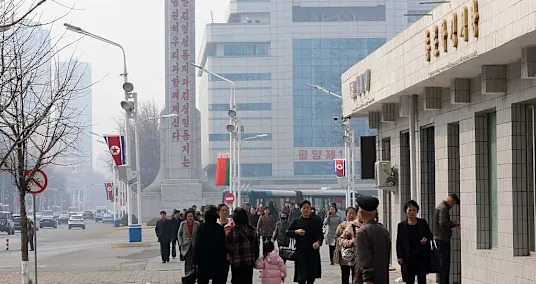
China has announced that its flag carrier, Air China, will resume direct flights to North Korea after a six-year pause, following the restoration of passenger train services between Beijing and Pyongyang.
This marks a significant step toward reopening North Korea, one of the world's most isolated nations, to the world.
Transport links between the two capitals had been suspended since the start of the Covid-19 pandemic in 2020, when Pyongyang implemented a very strict border closure.
While North Korean carrier Air Koryo already resumed flights to Beijing in 2023 and allowed Russian tour groups to visit in 2024, the return of China's air and railways are seen as a major economic milestone, as China has for decades been the main trading partner and a key source of diplomatic and economic backing for the country of 26 million people.
Before the pandemic, there were an estimated 300,000 foreign visitors in 2019, according to South Korea's Institute for International Economic Policy, and Chinese visitors accounted for 90% of all tourists to North Korea. Therefore, the long delay in resuming regular travel had surprised many regional observers.
"The reopening of these borders has been driven primarily by Pyongyang's timeline, which challenges the outdated assumption that Beijing dictates terms to a dependent client state," Seong-Hyon Lee, a visiting scholar at the Harvard University Asia Centre, explains.
Related
Nuclear ambitions complicated the relationship
Despite being Pyongyang’s primary ally, Beijing has frequently voiced disapproval over the North's persistent missile tests and nuclear ambitions. This aspect created a bumpy relationship with Pyongyang, with analysts saying that a nuclear-armed North Korea has often been something of a liability.
The diplomatic normalisation was highlighted last September, when Kim Jong Un attended a massive military parade in Beijing alongside Russian President Vladimir Putin. This was Kim's first appearance at a Chinese military display.
Lim Eul-chul, a North Korea expert at South Korea's Kyungnam University, argues that the war in Iran, in particular, increased "the need for closer coordination between the two nations".
LATEST POSTS
- 1
 Find the Historical backdrop of Common liberties: Advancing Equity and Equity Around the world
 - 2Massachusetts court hears arguments in lawsuit alleging Meta designed apps to be addictive to kids
- 3Turning into a Sharp Financial backer: Individual budget Wins
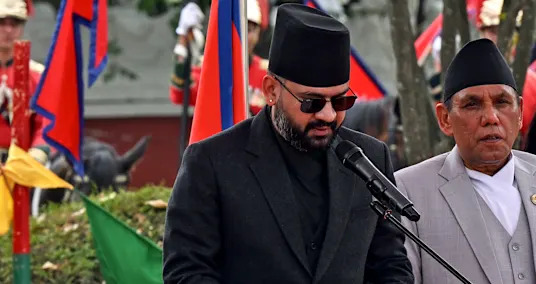
- 4Nepal’s youngest premier sworn in after releasing new rap song about unity
- 5Polish law aimed at lowering petrol prices takes effect



- How a toxic self-improvement trend with a funny name took over your feed
- Lego's $650 Pokémon set is already sold out as demand, preorders surge
- UAE used military bases in Red Sea region to aid Israel's war against Hamas, leaks reveal
- When is MLK Day? Plus, the dates of when other federal holidays land in 2026.
- Brazil passes anti-gang law allowing seized crypto to fund security forces
- How did life begin on Earth? New experiments support 'RNA world' hypothesis
- More people are addicted to marijuana, but fewer of them are seeking help, experts say
- Boats escort freed whale away from shallow waters off German coast
- Hundreds rally in West Bank against Israeli death penalty for Palestinians